
“Nous prendrons le temps de vivre, d’être libres mon amour
Sans projets et sans habitudes nous pourrons rêver notre vie”
“We will take the time to live, to be free, my love,
without plans and without routine, we will be able to dream our lives.”
(Le Temps de Vivre)
Georges Moustaki, a French singer-songwriter with a richly diverse background – Italian, Greek, Jewish and Egyptian – was born on 3 May 1934 in Alexandria, Egypt, as Giuseppe Mustacchi. He grew up in a Greek-Jewish family that spoke Italian. His parents ran a bookshop in the cosmopolitan city, where different cultures and communities lived side by side. Deeply attached to French culture, they sent him to a French school. At home he was called Giuseppe, in the Egyptian civil registry he was registered as Youssef, at school he was known as Joseph, and once he arrived in France he adopted the name Georges – out of admiration for Georges Brassens. This succession of names reflects the colourful Mediterranean world in which Moustaki felt at home.
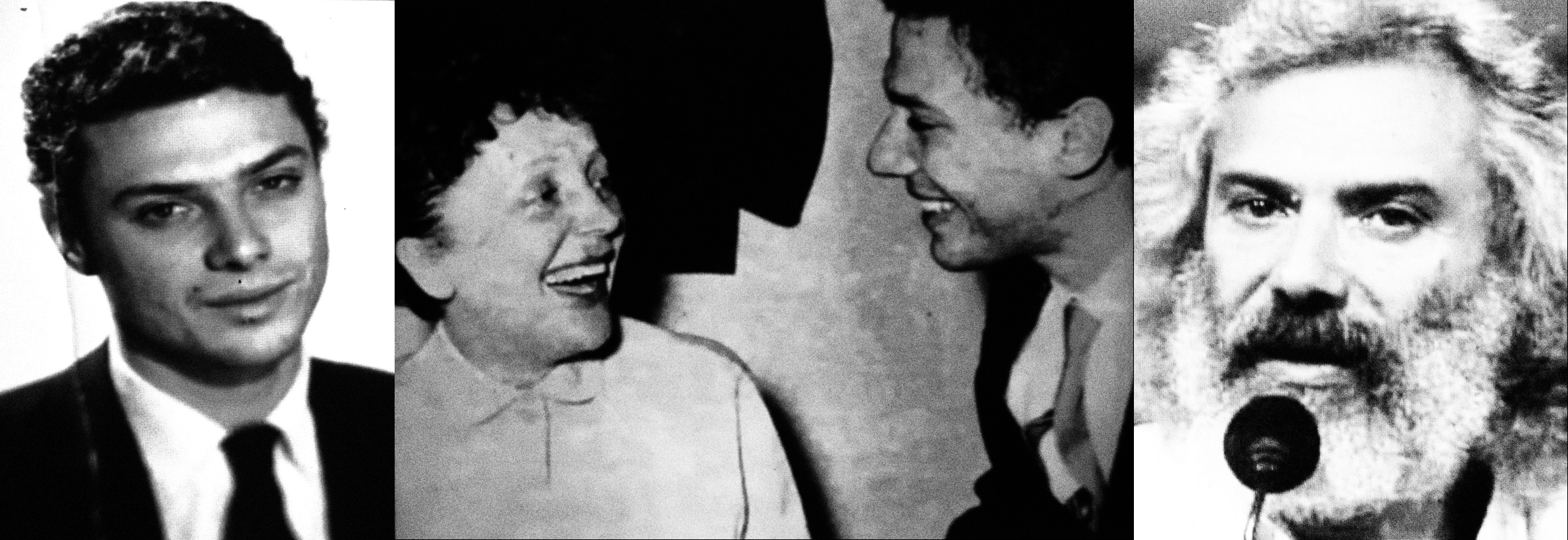
From an early age, Moustaki was drawn to French literature and the French chanson tradition. His love of writing grew, and before long he ventured into his first song lyrics. At the age of seventeen, he returned from a holiday in France firmly convinced that he wanted to seek his future there. With his parents’ permission, he left for Paris. A job as a bartender brought him into contact with well-known figures from the music scene, including Georges Brassens, who encouraged him to continue writing songs. In 1958, Moustaki was introduced to Édith Piaf. He wrote one of her best-known songs, Milord, and the two had a brief but passionate relationship. Moustaki’s reputation as a songwriter grew rapidly, and he went on to work with artists such as Yves Montand, Henri Salvador, Barbara and Serge Reggiani.
In the early 1960s, Moustaki did not yet really see himself as a singer or performer. That changed during the student uprising of May 1968 in Paris. Together with fellow artists, he organised solidarity concerts and discovered a real passion for the stage. Shortly afterwards the release of his first 45 rpm single, Le Métèque, made him famous almost overnight. Over the following three decades, Moustaki became a true citizen of the world. He travelled to every corner of the globe to perform, drawing inspiration along the way from new cultures and musical traditions like the bossa nova in Brasil. Alongside his beautiful romantic ballads, Moustaki was also a politically engaged artist. Together with Mikis Theodorakis, Paco Ibáñez and Zeca Afonso, he spoke out against the dictatorships in Greece, Spain and Portugal and was deeply moved when freedom returned.
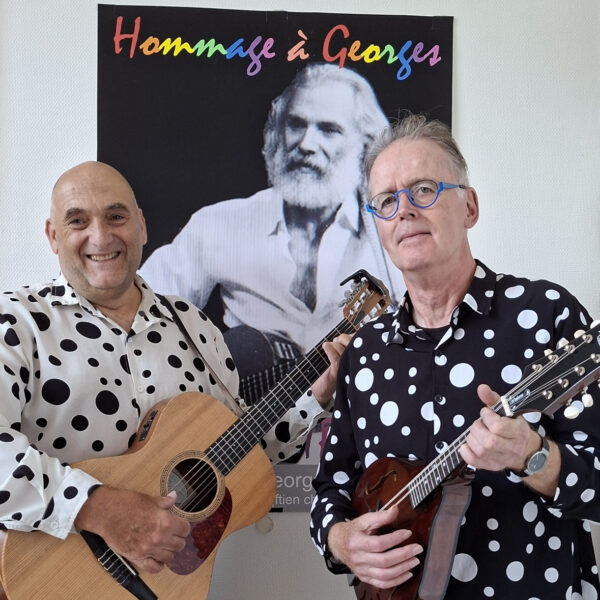
In Homage to Georges Moustaki, MÉNESTREL tells the story of his life and career through images, anecdotes and fifteen of his finest chansons. Alongside classics such as Le Métèque, Le Temps de Vivre, Ma Liberté and Ma Solitude, other gems are also featured – less well known, perhaps, but no less remarkable.
Georges Moustaki: true citizen of the world, child of the Mediterranean, and passionate singer of freedom, love and brotherhood.